PODCAST: The Heart’s Electromagnetic Field
1. Introduction: Re-evaluating the Physiology of Insight in the Age of Complexity
In the high-stakes environments of modern leadership, strategic innovation, and professional navigation, the faculty of intuition has long held a paradoxical status. It is simultaneously the most prized asset of the visionary decision-maker and the most elusive quality to quantify within the rigid frameworks of materialist science. For decades, the prevailing biological dogma positioned the cranial brain as the sole command center of human intelligence, viewing the heart as merely a mechanical pump—a muscular actuator responsive only to the autonomic dictates of the central nervous system. This cerebro-centric model relegated “gut feelings” or “heart-sense” to the realm of metaphor, emotion, or perhaps subconscious processing of historical data, stripping them of genuine cognitive or sensory authority.
However, a profound paradigm shift is currently reshaping the landscape of psychophysiology and neurobiology. A convergence of rigorous, peer-reviewed research in fields ranging from neurocardiology and bio-physics to quantum biology is dismantling the brain-centric hierarchy of human intelligence. Emerging evidence posits that the heart is not merely a servant to the brain but functions as a sophisticated, self-organized information processing center with its own intrinsic nervous system.1 It possesses the capacity to sense, learn, remember, and communicate independent of the cranial brain, generating a rhythmic electromagnetic field that dwarfs that of the brain in amplitude and influence.4
This report presents an exhaustive examination of the physiological and energetic mechanisms underpinning intuition and inner knowing. It explores the heart’s electromagnetic field as a primary interface for non-local information processing—a mechanism by which the human organism may detect and decode information from the environment before it is registered by the sensory cortex or conscious mind. We will dissect the state of “physiological coherence,” a measurable mode of high-performance functioning where the oscillatory systems of the body synchronize, amplifying cognitive clarity, emotional stability, and intuitive access.
The implications of this scientific re-evaluation are far-reaching. If the heart serves as a distinct interface for intelligence—one that operates at speeds exceeding linear rational thought and connects the individual to a broader informational field—then the cultivation of heart coherence transitions from a wellness “nice-to-have” to a strategic imperative. In a world characterized by accelerating complexity and data saturation, the ability to access non-linear, intuitive insight—the “inner knowing” that cuts through noise—may be the defining competency of future intelligence. This analysis navigates the transition from a mechanical view of the body to a bio-energetic model, offering a grounded, evidence-based framework for understanding the heart as an organ of perception and the seat of a deeper, more resonant form of human consciousness.
2. The Heart’s Electromagnetic Field: The Bio-Physics of Presence
To comprehend the mechanism of intuition and the phenomenon of “inner knowing,” one must first map the energetic environment in which the human nervous system operates. While the biochemical and neurological pathways of the body have been mapped with exquisite detail over the last century, the bio-electromagnetic interactions remain a frontier of high significance, often overlooked in standard physiological texts. The human heart acts as the primary generator of bio-electricity and magnetism within the human organism, creating a measurable, dynamic field that permeates every cell and extends significantly into the external environment.
2.1 The Physics of the Cardiac Field
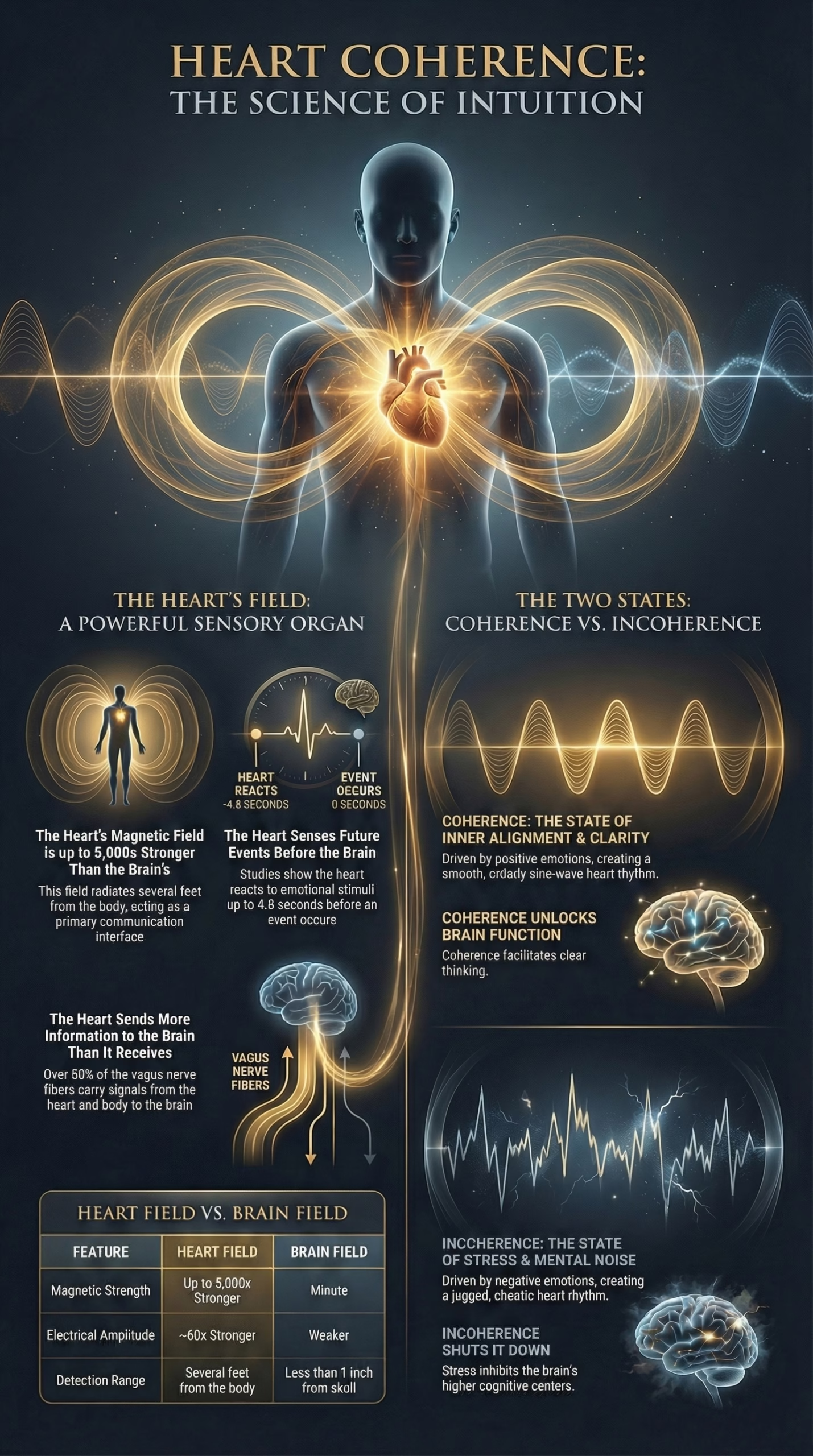
The heart is the most powerful source of electromagnetic energy in the human body, functioning as a biological oscillator of significant magnitude. Its electrical activity, which drives the rhythmic contraction of the heart muscle, creates an extensive electrical field that permeates the extracellular fluid of the body. This field is measured clinically via the electrocardiogram (ECG). Research indicates that the heart’s electrical field is approximately 60 times greater in amplitude than the electrical activity generated by the brain, which is measured by the electroencephalogram (EEG).1 This electrical signal is ubiquitous throughout the body; it can be detected anywhere on the body’s surface, serving as a global synchronizing signal that potentially coordinates the timing and rhythm of diverse biological processes.
However, it is the magnetic component of the heart’s field that offers the most profound implications for interaction and non-local communication. According to the laws of electromagnetism, every flow of electrical current generates a corresponding magnetic field. Because the electrical current of the heart is so strong, the magnetic field produced by the heart is approximately 100 to 5,000 times stronger than the magnetic field produced by the brain.4
The distinction between electrical and magnetic fields in biological tissue is critical. Bio-electrical signals are attenuated (weakened) and distorted as they pass through the heterogeneous tissues, bones, and fluids of the body. In contrast, magnetic fields pass through biological tissue—such as skin, skull, and muscle—virtually without distortion. Consequently, the magnetic field produced by the heart permeates the body and radiates outward into the space surrounding the individual. Using extremely sensitive SQUID (Superconducting Quantum Interference Device) magnetometers, this field can be detected and mapped up to several feet away from the body in all directions.1
This field is not an amorphous cloud but is organized. The field forms a torus—a doughnut-shaped dynamic energy field that continuously fluctuates in response to the cardiac cycle. This toroidal geometry suggests that the human biofield is not contained within the boundary of the skin but acts as a radiating energetic environment that constantly interacts with the fields of others and the broader electromagnetic environment.
2.2 Information Encoding and Emotional Modulation
Crucially, the heart’s electromagnetic field is not a static carrier wave or a simple byproduct of mechanical pumping. It appears to act as a carrier of information, encoding emotional and physiological data in its waveforms.5 Just as a radio wave carries music or voice data via frequency modulation (FM) or amplitude modulation (AM), the heart’s magnetic field is modulated by the rhythmic patterns of the heartbeats—specifically, the variances in the time intervals between heartbeats, known as Heart Rate Variability (HRV).
Research at the Institute of HeartMath and other centers has demonstrated that different emotional states produce distinct, measurable signatures in the heart’s electromagnetic field.
- Incoherence and Noise: When an individual experiences negative or depleting emotions such as anger, frustration, anxiety, or fear, the heart rhythms become erratic, disordered, and jagged. This state is termed “incoherence.” This disordered information is encoded into the electromagnetic field, effectively broadcasting a “noisy” or discordant signal into the internal and external environment.5
- Coherence and Harmony: Conversely, sustained positive emotional states—specifically gratitude, appreciation, care, and compassion—generate highly ordered, smooth, sine-wave-like heart rhythms. This state is termed “psychophysiological coherence.” Spectral analysis reveals that these coherent rhythms alter the power spectrum of the magnetic field, broadcasting a signal of stability, synchronization, and order.5
This modulation implies that the “vibe” or “presence” of a person is not merely a psychological projection or a metaphor for body language, but a tangible electromagnetic broadcast containing specific information about their emotional and physiological state. The field acts as a bridge, translating the internal emotional landscape into a physical field that interacts with the world.
2.3 The Field as a Synchronizing Agent
The heart’s field appears to serve as a central synchronizing signal within the body, coordinating the activity of other physiological systems. Evidence suggests that the rhythmic patterns of the heart modulate the brain’s electrical activity, influencing alpha wave synchronization and cognitive performance.5 The brain is continuously bathed in the heart’s electromagnetic field, and neural firing patterns can entrain to the cardiac rhythm.
Furthermore, this synchronization extends beyond the boundaries of the individual. Studies on “energetic communication” or “bio-electromagnetic interactions” demonstrate that the heart’s electromagnetic signals can be detected in the brainwaves of people up to five feet away.8 In controlled experiments where two subjects are seated near each other without physical contact, the electrocardiogram (ECG) of one person can be registered in the electroencephalogram (EEG) of the other, indicating a silent, energetic transfer of information.5
This phenomenon is most pronounced when the “sender” is in a state of high heart coherence. The coherent field appears to be more potent and organized, capable of driving entrainment in others. This bio-magnetic coupling provides a physiological basis for empathy, non-verbal communication, and the “collective field” dynamics observed in teams or groups. It implies that human beings are continuously exchanging electromagnetic information, and that the heart is the primary organ of this interface—a literal transmitter and receiver of emotional data.
2.4 Data Comparison: Heart vs. Brain Fields
To visualize the dominance of the cardiac field in the human energetic system, we can compare the measurable outputs of the heart and brain.
Feature | Heart Field | Brain Field | Physiological Implication |
Electrical Amplitude | ~60x stronger than the brain | Weaker, requires scalp electrodes | The heart acts as the primary electrical generator, setting the bio-electric “tone” for the body. |
Magnetic Strength | ~100–5,000x stronger than the brain | Minute, requires shielded rooms | The heart’s magnetic influence permeates all tissue and extends into the environment, acting as a global signal. |
Detection Range | Several feet (3–5 ft+) outside the body | Limited to immediate proximity of the skull (<1 inch) | The heart is the primary organ of external energetic interaction and presence; the brain is internal processing. |
Information Content | Encodes emotional state (HRV patterns) | Encodes cognitive/neural processing | Emotional state is the primary “broadcast” of the human biofield; thought is secondary and localized. |
Function | Global synchronization, carrier wave | Local neural computation, specific processing | The heart provides the synchronization signal (the beat) that the brain and organs align to. |
Table 1: Comparative Analysis of Heart vs. Brain Electromagnetic Fields 1
This data fundamentally challenges the brain-centric view of human function. If the heart generates the primary field environment in which the brain operates, then the quality of that field (coherent vs. incoherent) dictates the quality of neural processing. The “science of inner knowing” thus begins with the management of this electromagnetic environment.
3. Heart Coherence Science Explained
The concept of “coherence” is central to understanding how the heart functions not just as a pump, but as an organ of intelligence and intuition. In physics, coherence refers to the ordered, harmonious functioning of parts within a system—for example, the photons in a laser behaving as a single, unified wave, as opposed to the scattered light of a flashlight. In psychophysiology, Heart Coherence (or psychophysiological coherence) describes a specific, measurable state where the body’s oscillatory systems—respiration, heart rhythms, and blood pressure rhythms—synchronize and operate at a resonant frequency.2
3.1 Physiological Coherence Defined
Physiological coherence is distinct from the state of relaxation. While relaxation is characterized by a reduction in autonomic outflow, a general lowering of heart rate, and a shift toward parasympathetic dominance (“rest and digest”), coherence is an active, high-performance state.10 It is possible to be relaxed but not coherent (e.g., zoning out on the couch), and it is possible to be coherent while highly active (e.g., an athlete in “the zone”).
Coherence is physiologically defined by the synchronization of the respiratory rhythm, the heart rate variability (HRV) cycle, and the blood pressure wave (Traube-Hering-Mayer waves). In this state, the HRV waveform shifts from a jagged, irregular pattern to a smooth, ordered, sine-wave-like pattern oscillating at a frequency of approximately 0.1 Hz (10 seconds per cycle).12 This 0.1 Hz frequency is the natural resonant frequency of the human baroreflex system, the feedback loop between the heart and brain that regulates blood pressure.14 When the system locks into this frequency, there is maximized efficiency in fluid exchange, energy conservation, and neural communication. The system is “in sync.”
3.2 Emotional State as the Driver of Heart Rhythms
The primary driver of heart rhythm patterns—and thus the shift into or out of coherence—is emotional state. The brain and heart communicate continuously via the autonomic nervous system (ANS). Neural inputs from the brain influence the heart’s beat-to-beat intervals, creating Heart Rate Variability (HRV).
- Incoherence (Stress Response): Stressful emotions like anger, frustration, fear, or anxiety activate the sympathetic nervous system (fight-or-flight) in a chaotic manner. This causes the heart rhythm to become erratic and disordered. The HRV graph looks like jagged peaks and valleys. This “noise” in the system inhibits higher brain function, creating what is known as “cortical inhibition”.16 The brain interprets this chaotic signal as a threat, shutting down executive functions to focus on survival.
- Coherence (Regenerative State): Positive, regenerative emotions such as appreciation, care, love, and compassion shift the system into coherence. This is not simply a “calming” effect but an ordering effect. It reflects a balanced, dynamic interplay between the sympathetic (accelerator) and parasympathetic (brake) branches of the autonomic nervous system.2 The HRV graph becomes a smooth, rolling wave. In this state, the heart sends a signal of stability and safety to the brain, facilitating higher cognitive function.
3.3 Cognitive and Regulatory Benefits
The state of coherence facilitates cortical facilitation, where the brain’s processing capabilities are enhanced. The brain constantly monitors the heart’s input; when the heart transmits a coherent signal, the brain interprets this as a stable environment, allowing metabolic and neural resources to be allocated to the prefrontal cortex—the center of executive function, foresight, strategic planning, and decision-making.17
Research indicates that sustaining coherence leads to measurable improvements in cognitive and emotional performance:
- Cognitive Clarity: Enhanced focus, short-term memory, and information processing speed. Studies show improved reaction times and better performance on cognitive tasks requiring attention and discrimination.18
- Emotional Regulation: Increased ability to self-regulate reactions. The “vagal brake” is more accessible, allowing individuals to pause before reacting and maintain stability under pressure.12
- Decision Making under Uncertainty: Improved ability to process complex information and access intuitive insights. By removing the “noise” of the stress response from the neural signal, the brain can detect more subtle signals from the environment and internal systems.16
3.4 Fractal Dynamics of Heart Rate Variability
A critical, often misunderstood nuance in heart science is the understanding of fractal dynamics. A healthy heart is not a metronome. A perfectly regular heartbeat (zero variability) is actually a sign of pathology, aging, or imminent failure.24 A healthy heart exhibits fractal variability—a complex, self-similar pattern of variability that indicates the system’s ability to adapt to a constantly changing environment.
Fractal analysis of HRV reveals that the heart operates on the edge of chaos, maintaining a delicate balance between order and flexibility:
- High Fractal Complexity: Indicates a robust, resilient system capable of rapid adaptation to physical or psychological stress. This complexity is typical of healthy, younger individuals.24
- Loss of Complexity: A reduction in fractal variability (the heart beating too regularly or completely randomly without structure) correlates with aging, disease (such as congestive heart failure or diabetes), and increased mortality risk.27
The state of coherence does not eliminate this complexity; rather, it organizes it. Coherence acts as a “carrier wave” of order within the fractal complexity, optimizing the balance between stability (order) and adaptability (chaos). This mirrors the “fractal nature of reality” explored in advanced systems theory and referenced in the Fractal narratives 30, where stability and infinite adaptability coexist. The coherent heart is a fractal antenna, tuned to receive and process information from the complex, non-linear environment.
State | HRV Pattern | ANS Balance | Cognitive Effect | Fractal Dynamics |
Stress / Incoherence | Jagged, erratic, chaotic | Sympathetic overdrive or withdrawal | Cortical Inhibition (Brain fog, tunnel vision) | Loss of complexity or randomness |
Relaxation | Low variability, slower rate | Parasympathetic dominance (Rest/Digest) | Reduced arousal, sleepiness | Reduced complexity (lower metabolic demand) |
Coherence | Smooth, sine-wave, ordered (0.1 Hz) | Balanced Sympathetic/Parasympathetic | Cortical Facilitation (Clarity, Intuition) | Optimized complexity (Stability + Adaptability) |
Table 2: Differentiating Stress, Relaxation, and Coherence 10
4. Intuition Through the Lens of Science
While often dismissed in corporate and scientific circles as mystical or “woo-woo,” intuition is increasingly defined in rigorous scientific terms as a rapid, non-linear form of pattern recognition and information processing that occurs below the threshold of conscious awareness. The heart appears to play a central role in this process, acting as a sensory organ that detects information prior to the brain. This “heart intelligence” provides the physiological substrate for what is often called “inner knowing.”
4.1 Types of Intuition
Current research categorizes intuition into three distinct types, moving from the purely biological to the potentially quantum 31:
- Implicit Learning: This is knowledge acquired through past experience that is accessed rapidly and unconsciously. It is the “expert intuition” of a chess master recognizing a pattern or a firefighter sensing a backdraft based on subtle environmental cues. This is largely brain-based pattern matching utilizing the basal ganglia and hippocampus.
- Energetic Sensitivity: The ability of the nervous system to detect and respond to environmental signals, such as electromagnetic fields, seismic precursors, or the biofields of others. This is often felt as “vibes” or empathy and is mediated by the heart’s capacity to sense electromagnetic variances.
- Non-local Intuition: The knowledge or sensing of a future event that cannot be explained by past knowledge or current sensory cues. This suggests a connection to a field of information outside classical space-time limits, often referred to in physics as non-locality.
4.2 Electrophysiological Evidence of Pre-Stimulus Response
The most compelling evidence for the heart’s role in non-local intuition comes from studies on “pre-stimulus response” or presentiment. These studies investigate whether the human body can respond to a stimulus before it is experienced.
In rigorously controlled experiments at the HeartMath Institute and other laboratories, subjects were connected to ECG (heart) and EEG (brain) monitors. They were shown a series of images on a computer screen. The images were selected randomly by a computer after the subject’s physiological data was recorded, meaning neither the subject nor the researcher could know what image was coming next. The images were either calming (e.g., landscapes) or emotionally arousing (e.g., car crashes, snakes).32
The aggregated results demonstrated a “reversal of the arrow of time” in biological processing:
- The Heart Responds First: The heart demonstrated a significant deceleration and change in rhythm (HRV) approximately 4.8 seconds before the image was displayed, specifically for emotionally arousing images.22 The heart reacted to the “future” stressor before it occurred.
- Heart-Brain Sequence: The data showed that the heart received the intuitive information approximately 1.3 to 1.5 seconds before the brain (measured via cortical event-related potentials).16 The brain’s response (EEG) occurred after the heart’s response but still before the image was shown.
- Afferent Signaling: The timing suggests the heart receives non-local information first, then transmits a neural signal up the vagus nerve to the brain, which then processes the “hunch” and prepares the body.16
This indicates that the heart functions as a quantum sensor, coupled to a field of information that transcends linear time. The heart acts as an “early warning system,” perceiving the emotional valence of a future event and alerting the brain to prepare.36 This aligns with the “Oracle” concept referenced in the provided text 30, where the heart is the interface for wisdom that transcends current data.
4.3 Intuition vs. Impulsivity
From a neuroscience perspective, it is crucial to distinguish intuition from impulsivity or fear-based projection. They often feel similar (“a gut feeling”), but their physiological origins and signatures are distinct.
- Impulsivity is a reactive, dopamine-driven urge often stemming from the amygdala (fear center) or the reward system (ventral striatum). It is characterized by urgency, high emotional charge, anxiety, and a “pushing” energy.38 It typically results in incoherent heart rhythms.
- Intuition is characterized by a “calm certainty” or a “pulling” energy. Physiologically, intuitive insights are often accompanied by a coherent heart rhythm, whereas fear-based projections create incoherent rhythms.40
- Interoception: The brain’s ability to read bodily signals is known as interoception. This process is mediated by the insula and anterior cingulate cortex.42 High interoceptive accuracy (the ability to feel one’s heartbeat) correlates with better intuitive decision-making, provided the individual is not high in anxiety. When the heart is coherent, the signal-to-noise ratio improves, allowing the insula to read the “intuitive signal” clearly without the distortion of stress.43
The heart’s intuitive signal is subtle. It requires a baseline of physiological coherence to be distinguished from the “noise” of emotional turmoil or wishful thinking. This reinforces the necessity of “tuning the instrument” through coherence practices.
5. The Heart–Brain Dialogue
The communication between the heart and brain is not a monologue from the brain downwards. It is a dynamic, bidirectional dialogue where the heart often acts as the primary influencer. Neurocardiology—the study of the heart’s nervous system—has established that the heart possesses its own intrinsic nervous system, a complex network of approximately 40,000 neurons, neurotransmitters, proteins, and support cells that functions as a “little brain”.1 This intracardiac nervous system allows the heart to learn, remember, sense, and make functional decisions independent of the cranial brain.
5.1 The Four Pathways of Communication
The heart communicates with the brain via four distinct, simultaneous pathways. Understanding these pathways demystifies how “heart-based” knowing can influence “brain-based” thinking 17:
- Neurological (Nervous System): The heart and brain are connected via the vagus nerve and spinal column. Critically, neuroanatomy reveals that 80-90% of the fibers in the vagus nerve are afferent, meaning they carry signals from the body to the brain.1 The heart sends far more information to the brain than the brain sends to the heart. These signals travel to the medulla, hypothalamus, thalamus, and amygdala, directly influencing instincts, emotional processing, and fear responses before they even reach the cerebral cortex (conscious thought).
- Biochemical (Hormones): The heart acts as an endocrine gland. It produces hormones such as Atrial Natriuretic Peptide (ANP), which affects blood vessels and the brain’s stress response. It also manufactures and releases Oxytocin, the “love” or “bonding” hormone, in concentrations as high as the brain.2 This biochemical pathway explains why heart coherence (love/care) physically alters the brain’s chemistry, inhibiting stress hormones like cortisol and promoting bonding and trust.
- Biophysical (Pressure Waves): The rhythmic pumping of the heart creates pressure waves that travel through the arteries to the brain. These waves regulate the electrical activity of neurons, influencing the timing and synchronization of neural firing.
- Energetic (Electromagnetic): As discussed in Section 2, the heart’s magnetic field permeates the brain and modulates brainwave synchronization.5 This is the fastest communication pathway, operating at the speed of light.
5.2 Modulation of Cortical Function: Facilitation vs. Inhibition
The signals sent by the heart have a regulatory effect on the brain’s processing capacity. The brain essentially “listens” to the heart to determine the state of the organism.
- Cortical Facilitation: When the heart rhythm is coherent (stable, orderly), the afferent signals sent to the brain act to facilitate cortical function. This enhances the activity of the prefrontal cortex—the area responsible for “executive functions” like strategic planning, complex decision-making, and emotional regulation. In this state, the brain is “online” and capable of high-level insight.12
- Cortical Inhibition: Conversely, when the heart rhythm is incoherent (stress/anger), the afferent signals result in cortical inhibition. This literally shuts down or impairs the higher cognitive centers. The brain interprets the incoherent signal as a survival emergency, shifting resources to the amygdala (fear center) and hindbrain. This physiological mechanism explains the phenomenon of “going blank” under stress—the heart has physically inhibited the brain’s ability to process information or access wisdom.12
5.3 Heartbeat Evoked Potentials (HEP)
Neuroscience measures the brain’s response to the heartbeat using a metric called the Heartbeat Evoked Potential (HEP). This is a specific waveform in the EEG that occurs shortly after the heartbeat. Research shows that the amplitude of the HEP predicts the accuracy of interoceptive awareness and intuitive processing. When an individual is in a state of heart coherence, the HEP amplitude often increases, indicating that the brain is more synchronized with the heart’s rhythm and is “listening” more effectively.5 This synchronization suggests that the heart provides a stable reference point—a “carrier wave”—upon which the brain relies to decode complex environmental information.
6. Practical Application: Training Inner Knowing
The transition from understanding the science of heart coherence to embodying it requires specific protocols. These practices are not merely relaxation exercises; they are biofeedback techniques designed to reset the autonomic baseline, increase vagal tone, and train the nervous system to sustain coherence as a default state.
6.1 Resonance Frequency Breathing
The most effective and immediate entry point into coherence is regulating the breath to the body’s resonant frequency.
- The Mechanism: Breathing at a specific rate stimulates the baroreflex (the mechanism that regulates blood pressure). This creates a resonance between heart rate, respiration, and blood pressure rhythms. When these three oscillators synchronize, Heart Rate Variability (HRV) is maximized, and the system shifts into coherence.50
- The Protocol: The target rate for most adults is approximately 0.1 Hz, which equates to 5.5 to 6 breaths per minute.
- Sit upright to allow free diaphragm movement.
- Inhale slowly and deeply through the nose for 5 seconds.
- Exhale slowly through the mouth (pursed lips) or nose for 5 seconds.
- Maintain this rhythm for 3-5 minutes.
- Focus on the feeling of the breath moving in the belly, avoiding chest breathing.
- Benefit: This mechanically forces the system into synchrony, reducing sympathetic overdrive and quieting the “noise” that obscures intuitive signals. It is the physiological “reset button”.15
6.2 The Quick Coherence® Technique
Developed by the HeartMath Institute, this technique combines breathing with emotional shifting to amplify the electromagnetic field and engage the heart’s hormonal response.53
- Heart Focus: Direct your attention to the physical area of the heart or the center of the chest. This shifts neural activity away from the racing mind/forebrain to the physical heart, beginning the process of interoception.
- Heart Breathing: Breathe deeply as if the breath is flowing in and out of the heart area. Breathe a little slower and deeper than usual (referencing the 5-second rhythm). This synchronizes the respiration and heart rhythm.
- Heart Feeling: Intentionally activate a positive emotion—appreciation, care, or gratitude for a person, pet, place, or memory. This is the crucial step that modulates the electromagnetic field from chaotic to coherent. It is not enough to think about gratitude; one must feel the sensation of it in the chest.54
6.3 The Heart Lock-In® Technique
This is a more advanced practice for sustaining coherence, radiating the field, and accessing intuition.53
- Establish coherence using the steps above (Focus, Breathing, Feeling).
- Sustain: Hold the feeling of appreciation or care, radiating it outward to yourself and your environment. Imagine this energy filling your cells and then extending beyond your body.
- Observe: If the mind wanders or negativity intrudes, gently return focus to the heart area and the feeling of care. Do not fight the thoughts; just anchor back to the heart.
- Listen: In this quieted state, ask the heart for guidance on a specific issue. “What do I need to know about X?” Then, wait. Listen for the “first signal”—often a feeling, a flash of insight, or a simple “yes/no” sensation—rather than a mental analysis. This leverages the heart’s pre-stimulus processing capacity.
6.4 Emotional Self-Regulation for Intuition
To reliably use intuition, one must learn to distinguish the “signal” from the “noise” of fear. High arousal (fear/anxiety) constricts perception; coherence expands it.
- The Neutrality Practice: When facing a decision, perform the Quick Coherence technique to neutralize the emotional charge. Move from “panic” to “neutral.”
- The Query: Once neutral, ask the question. Intuition typically arrives as a calm, steady signal or a “pull” (attraction), whereas fear feels like a “push,” urgency, agitation, or a “grasping” energy.40 The body’s response in coherence is often a feeling of expansion or lightness, whereas fear is contraction or heaviness.
7. Fractal Perspective: The Heart as the Event Horizon
Bridging the empirical with the philosophical, the science of the heart aligns with the fractal nature of reality described in advanced systems theory and the metaphysical frameworks of the Fractal and Oracle texts. The concept of the “fractal” implies that the part contains the whole—that the structure of the microcosm reflects the macrocosm.30
7.1 The Holographic Heart and the Event Horizon
In the context of the Fractal themes, the heart can be viewed as the individual’s “event horizon”—the boundary where the linear, localized self meets the non-local, infinite field. Just as a black hole’s event horizon encodes information about the universe, the heart’s electromagnetic field encodes the information of the individual’s consciousness.5
- Inner Coherence Mirrors Outer Order: When the internal system (heart-brain) is coherent, perception of the external world shifts. The “fractal” of one’s life organizes itself around this central stability. As noted in the Fractal texts, “The mountain isn’t just Kailash. It’s the projection of our own awakening”.30 This aligns with the biofield principle that our internal field quality filters and shapes our experience of reality. A coherent internal field attracts or organizes a coherent external reality (synchronicity).
- The Oracle Within: The heart serves as the biological hardware for the “Oracle”—the inner source of wisdom referenced in the provided literature. By accessing the “space between thoughts” (coherence), one accesses the “fractal beyond sight”—the intuitive data that exists in the quantum vacuum or global field, waiting to be collapsed into reality by an observer.30
7.2 Alignment Precedes Clarity
A recurring theme in the science of emergence is that complex systems self-organize when they reach a critical threshold of coherence. The heart is the metronome of this organization. The teaching “Let the Heart Be the Interface” 30 is not poetic; it is systemic. One does not “think” their way into intuitive clarity; one “aligns” into it. The heart’s rhythm sets the beat; the brain provides the lyrics. When the heart is closed (incoherent), the fractal of one’s life appears chaotic and random. When the heart is open (coherent), the fractal reveals its pattern, and “intuition” is simply the act of reading the pattern before it fully manifests in linear time.30
8. Conclusion: The Future of Human Intelligence
The scientific re-examination of the heart reveals that it is far more than a pump; it is a sophisticated organ of perception, a distinct center of intelligence, and the central generator of the human energetic system. The data is compelling: the heart generates a field 5,000 times stronger than the brain 4, receives intuitive information seconds before the cortex 32, possesses the neural architecture to learn and remember 1, and synchronizes the physiology of the entire organism.
This research repositions intuition from a mystical fringe benefit to a core biological competency. In an era increasingly dominated by Artificial Intelligence, “Heart Intelligence” represents the uniquely human advantage. AI excels at processing linear, historical data (the known) and pattern matching at massive scales. However, the human heart, through its connection to non-local fields and its capacity for coherence, excels at processing non-linear, future-oriented information (the unknown).56 AI is a reflection of human logic; Heart Intelligence is a connection to universal wisdom.
The future of human intelligence, therefore, is not merely about processing speed or data retention—capacities where silicon already surpasses carbon. It is about coherence. It is about the ability to integrate the analytical power of the brain with the intuitive, field-sensing power of the heart. It is about “High-Vibration Leadership” that utilizes the bio-magnetic field to influence teams and shape outcomes without words.
As humanity faces increasingly complex, systemic challenges—the “collapse” or “transition” hinted at in the Fractal narratives 30—the ability to access this inner guidance system becomes a survival imperative. We are moving from the Information Age to the Intuition Age, where the ability to sense the signal amidst the noise will define leadership, innovation, and wisdom.
Final Reflection: The science invites us to listen differently. It suggests that the “Oracle” is not an external entity to be sought, but an internal frequency to be tuned. By regulating the breath, engaging the heart, and cultivating coherence, we do not just improve our health; we activate the interface that connects the finite self to the infinite field of possibility. The bell of awakening is ringing, not in the distance, but in the chest.
References & Data Sources
- Electromagnetic Field Strength & Physics:.4
- Intuition & Pre-Stimulus Response Studies:.16
- Heart-Brain Communication (Neurocardiology):.1
- Coherence & HRV Science:.2
- Fractal Physiology:.24
- Biofield Science:.59
- Techniques (Breathing/Lock-In/Protocols):.13
- AI & Heart Intelligence:.30
- Thematic Integration (Fractal/Oracle):.30
Works cited
- 7 Scientific Reasons You Should Listen To Your Heart (Not Your Brain) – Dr. Joel Kahn, accessed December 22, 2025, https://www.drjoelkahn.com/7-scientific-reasons-listen-heart-not-brain/
- Overview of the Heart’s Intelligence: A Dynamic Perspective Into the World of Energetic Wellness – AHVMA, accessed December 22, 2025, https://www.ahvma.org/wp-content/uploads/heart-intelligence-vol-68.pdf
- Exploring the Little Brain in the Heart: A Journey Into Heart-Brain Communication | HeartMath Institute, accessed December 22, 2025, https://www.heartmath.org/articles-of-the-heart/little-brain-in-the-heart/
- accessed December 22, 2025, https://rsisinternational.org/journals/ijriss/articles/the-pulse-of-emotions-a-review-paper-on-the-interaction-of-heart-intelligence-subconscious-mind-and-human-bio-magnetic-fields/#:~:text=It%20has%20been%20scientifically%20shown,the%20physical%20body%20%5B69%5D.
- Chapter 06: Energetic Communication | HeartMath Institute, accessed December 22, 2025, https://www.heartmath.org/research/science-of-the-heart/energetic-communication/
- Wishing Well: Heart Waves That Change Brain Waves – Encompass, accessed December 22, 2025, https://www.encompasswi.org/wishing-well-heart-waves-that-change-brain-waves/
- The Pulse of Emotions: A Review Paper on the Interaction of Heart Intelligence, Subconscious Mind, and Human Bio-Magnetic Fields – International Journal of Research and Innovation in Social Science, accessed December 22, 2025, https://rsisinternational.org/journals/ijriss/articles/the-pulse-of-emotions-a-review-paper-on-the-interaction-of-heart-intelligence-subconscious-mind-and-human-bio-magnetic-fields/
- The Energetic Heart – HeartMath Institute, accessed December 22, 2025, https://www.heartmath.org/resources/downloads/energetic-heart/
- Each Individual Impacts the Field Environment – HeartMath Institute, accessed December 22, 2025, https://www.heartmath.org/articles-of-the-heart/global-interconnectedness/each-individual-impacts-the-field-environment/
- The Difference between Relaxation and Coherence – Reverence Events, accessed December 22, 2025, https://reverenceevents.com.au/the-difference-between-relaxation-and-coherence/
- About HeartMath, Coherence & HRV, accessed December 22, 2025, https://www.heartmathsouthafrica.co.za/about-heartmath-coherence-hrv/
- Cardiac coherence, self-regulation, autonomic stability, and psychosocial well-being – PMC, accessed December 22, 2025, https://pmc.ncbi.nlm.nih.gov/articles/PMC4179616/
- 30 days of Heart Rate Variability (HRV) Biofeedback | by Marco Altini – Medium, accessed December 22, 2025, https://medium.com/@altini_marco/30-days-of-heart-rate-variability-hrv-biofeedback-3fb7eb0209c3
- Corrigendum: A Practical Guide to Resonance Frequency Assessment for Heart Rate Variability Biofeedback – PMC – NIH, accessed December 22, 2025, https://pmc.ncbi.nlm.nih.gov/articles/PMC7793964/
- Rethinking the Resonance Frequency (RF) – Part 1: Understanding Resonance, accessed December 22, 2025, https://www.biosourcesoftware.com/post/rethinking-the-resonance-frequency-rf-part-1
- The heart and the brain quantic interaction – OAText, accessed December 22, 2025, https://www.oatext.com/the-heart-and-the-brain-quantic-interaction.php
- Chapter 01: Heart-Brain Communication | HeartMath Institute, accessed December 22, 2025, https://www.heartmath.org/research/science-of-the-heart/heart-brain-communication/
- Heart Rate Variability (HRV) and Its Relationship with Cognitive Decline – NeuronUP, accessed December 22, 2025, https://neuronup.us/cognitive-stimulation-news/therapeutic-and-psychological-intervention-methods/heart-rate-variability-and-its-relation-to-cognitive-decline/
- The intricate brain-heart connection: The relationship between heart rate variability and cognitive functioning – PubMed, accessed December 22, 2025, https://pubmed.ncbi.nlm.nih.gov/39645073/
- HRV effects on cognitive performance and neurological health, accessed December 22, 2025, https://www.nctneurofeedback.com/post/hrv-effects-on-cognitive-performance-and-neurological-health
- 21 DBT Emotional Regulation Skills & Worksheets – Positive Psychology, accessed December 22, 2025, https://positivepsychology.com/emotion-regulation-worksheets-strategies-dbt-skills/
- Intuitive Intelligence, Self-regulation, and Lifting Consciousness – PMC – PubMed Central, accessed December 22, 2025, https://pmc.ncbi.nlm.nih.gov/articles/PMC4010961/
- Effects of interoceptive training on decision making, anxiety, and somatic symptoms – NIH, accessed December 22, 2025, https://pmc.ncbi.nlm.nih.gov/articles/PMC7079488/
- Analysis of Heart Rate Variability and Implication of Different Factors on Heart Rate Variability – PMC – PubMed Central, accessed December 22, 2025, https://pmc.ncbi.nlm.nih.gov/articles/PMC8950456/
- Fractal dynamics in physiology: Alterations with disease and aging – PNAS, accessed December 22, 2025, https://www.pnas.org/doi/10.1073/pnas.012579499
- The application of fractal analysis in the measurement of heart rate variability (HRV), accessed December 22, 2025, https://www.researchgate.net/publication/380890051_The_application_of_fractal_analysis_in_the_measurement_of_heart_rate_variability_HRV
- Physiological Background of the Loss of Fractal Heart Rate Dynamics – ResearchGate, accessed December 22, 2025, https://www.researchgate.net/publication/7734380_Physiological_Background_of_the_Loss_of_Fractal_Heart_Rate_Dynamics
- Physiological Background of the Loss of Fractal Heart Rate Dynamics, accessed December 22, 2025, https://www.ahajournals.org/doi/pdf/10.1161/CIRCULATIONAHA.104.523712
- Higuchi’s fractal dimension (FD) values in the three studied groups. N:… – ResearchGate, accessed December 22, 2025, https://www.researchgate.net/figure/Higuchis-fractal-dimension-FD-values-in-the-three-studied-groups-N-normal-subjects_fig1_26803682
- THE ORACLE 2.0 – TEXT VERSION.pdf
- Chapter 07: Intuition Research | HeartMath Institute, accessed December 22, 2025, https://www.heartmath.org/research/science-of-the-heart/intuition-research/
- Electrophysiological Evidence of Intuition: Part 1. The Surprising Role of the Heart – ResearchGate, accessed December 22, 2025, https://www.researchgate.net/profile/Rollin-Mccraty/publication/8675025_Electrophysiological_Evidence_of_Intuition_Part_1_The_Surprising_Role_of_the_Heart/links/54ef4c090cf25f74d721e0df/Electrophysiological-Evidence-of-Intuition-Part-1-The-Surprising-Role-of-the-Heart.pdf
- Electrophysiology of Intuition: Pre-stimulus Responses in Group and Individual Participants Using a Roulette Paradigm – PMC, accessed December 22, 2025, https://pmc.ncbi.nlm.nih.gov/articles/PMC4010965/
- (PDF) Electrophysiological Evidence of Intuition: Part 2. A System-Wide Process?, accessed December 22, 2025, https://www.researchgate.net/publication/8541905_Electrophysiological_Evidence_of_Intuition_Part_2_A_System-Wide_Process
- Electrophysiological Evidence of Intuition: Part 1. The Surprising Role of the Heart, accessed December 22, 2025, https://www.heartmath.org/research/research-library/intuition/electrophysiological-evidence-of-intuition-part-1/
- Electrophysiological evidence of intuition: part 1. The surprising role of the heart – PubMed, accessed December 22, 2025, https://pubmed.ncbi.nlm.nih.gov/15025887/
- Electrophysiological evidence of intuition: Part 2. A system-wide process? – PubMed, accessed December 22, 2025, https://pubmed.ncbi.nlm.nih.gov/15165413/
- Intuition or Impulsivity? – Grace to Growth Wellness, accessed December 22, 2025, https://www.gracetogrowthwellness.com/blog-/intuition-or-impulsivity
- How Intuition Affects Self-Control | Psychology Today, accessed December 22, 2025, https://www.psychologytoday.com/us/blog/decisions-and-the-brain/202303/how-intuition-affects-self-control
- How Intuition Differs from Impulse and Fear – Dummies.com, accessed December 22, 2025, https://www.dummies.com/article/business-careers-money/business/general-business/how-intuition-differs-from-impulse-and-fear-147940/
- How to Tell the Difference Between Fear and Intuition | Psychology Today, accessed December 22, 2025, https://www.psychologytoday.com/us/blog/trust-yourself/202307/how-to-tell-the-difference-between-fear-and-intuition
- Cognition–Emotion Integration in the Anterior Insular Cortex – Oxford Academic, accessed December 22, 2025, https://academic.oup.com/cercor/article/23/1/20/327495
- Interoceptive awareness moderates neural activity during decision-making – ResearchGate, accessed December 22, 2025, https://www.researchgate.net/publication/257204005_Interoceptive_awareness_moderates_neural_activity_during_decision-making
- Interoceptive accuracy is associated with benefits in decision making in children – Frontiers, accessed December 22, 2025, https://www.frontiersin.org/journals/psychology/articles/10.3389/fpsyg.2022.1070037/full
- Cardiac vagal afferent neurotransmission in health and disease: review and knowledge gaps – Frontiers, accessed December 22, 2025, https://www.frontiersin.org/journals/neuroscience/articles/10.3389/fnins.2023.1192188/full
- The Heart, Mind and Spirit, accessed December 22, 2025, https://www.rcpsych.ac.uk/docs/default-source/members/sigs/spirituality-spsig/spirituality-special-interest-group-publications-professor-mohamed-omar-salem-the-heart-mind-and-spirit.pdf?sfvrsn=47fea910_2
- The Energetic Heart: Bioelectromagnetic Communication Within and Between People | HeartMath Institute, accessed December 22, 2025, https://www.heartmath.org/research/research-library/energetics/energetic-heart-bioelectromagnetic-communication-within-and-between-people/
- Characterizing the Heartbeat‐Evoked Potential: A Two‐Component Model of Cardiac Signal Processing? – PubMed Central, accessed December 22, 2025, https://pmc.ncbi.nlm.nih.gov/articles/PMC12673293/
- Affective interoceptive inference: Evidence from heart‐beat evoked brain potentials – PMC, accessed December 22, 2025, https://pmc.ncbi.nlm.nih.gov/articles/PMC6865546/
- A Practical Guide to Resonance Frequency Assessment for Heart Rate Variability Biofeedback – Frontiers, accessed December 22, 2025, https://www.frontiersin.org/journals/neuroscience/articles/10.3389/fnins.2020.570400/full
- The Impact of Resonance Frequency Breathing on Measures of Heart Rate Variability, Blood Pressure, and Mood – Frontiers, accessed December 22, 2025, https://www.frontiersin.org/journals/public-health/articles/10.3389/fpubh.2017.00222/full
- How to Improve Your HRV with Breathing Exercises & Breathwork – Othership, accessed December 22, 2025, https://www.othership.us/resources/hrv-breathing
- The Science of HeartMath – HeartMath, accessed December 22, 2025, https://www.heartmath.com/science/
- The Impact of Stress and the Basics of Heart Coherence – Supreme Court of Ohio, accessed December 22, 2025, https://www.supremecourt.ohio.gov/sites/specDockets/EducationSeries/2021/December/120921.pdf
- How to Measure Heart Rate Variability (HRV) using Fractals – Nodus Labs, accessed December 22, 2025, https://noduslabs.com/research/how-to-measure-heart-rate-variability-hrv-using-fractals/
- The Intelligence of the Heart | HeartCentered AI, accessed December 22, 2025, https://heartcentered.ai/heart-intelligence/
- Women & heart intelligence – My Green Pod, accessed December 22, 2025, https://www.mygreenpod.com/articles/women-heart-intelligence/
- Electrophysiological evidence of intuition: Part 2. A system-wide process?, accessed December 22, 2025, https://www.semanticscholar.org/paper/Electrophysiological-evidence-of-intuition%3A-Part-2.-McCraty-Atkinson/6395f3cdd73ed5f53c966923e6471ce9fee03a7a
- Biofield Science and Healing: History, Terminology, and Concepts – PMC – PubMed Central, accessed December 22, 2025, https://pmc.ncbi.nlm.nih.gov/articles/PMC4654789/
- Biofield Physiology: A Framework for an Emerging Discipline – PMC – PubMed Central, accessed December 22, 2025, https://pmc.ncbi.nlm.nih.gov/articles/PMC4654783/
- What Is Biofield Technology?, accessed December 22, 2025, https://www.iawaketechnologies.com/what-is-biofield-technology/
- An Overview of Biofield Devices – PMC – PubMed Central, accessed December 22, 2025, https://pmc.ncbi.nlm.nih.gov/articles/PMC4654784/
- A Beginner’s Guide to Resonance Frequency Breathing, accessed December 22, 2025, https://allos.app/resonance-frequency-breathing/a-beginners-guide-to-resonance-frequency-breathing/