

PODCAST: The Architecture of Coherence
The mainstream narrative of resilience is built upon a fundamental illusion. For decades, corporate environments, educational institutions, and societal frameworks have championed “grit”—defined as the passionate perseverance toward long-term goals—as the ultimate metric of human and systemic capability.1 This narrative suggests that success belongs to those who can endure the most friction, absorb the greatest amount of stress, and push through volatility by sheer force of will.2 However, when applied to complex, non-linear environments, this model of permanent pressure tolerance does not produce resilience; it engineers catastrophic failure.
To endure without recovery is not a sign of systemic health; it is the silent accumulation of hidden damage.4 The fragile system desires tranquility, the robust system resists volatility, but the truly antifragile system evolves from it.5 When organizations and societies glorify endurance over adaptation, they engage in “resilience theater”—a performance of toughness that masks underlying decay, shifting the burden of structural failures onto the psychology of the individual.7 True resilience is not the capacity to withstand permanent pressure. It is the capacity to recover, adapt, and maintain coherence under conditions of extreme volatility.
This analysis deconstructs the mainstream grit narrative by integrating neuroscience, systems theory, and organizational psychology. By examining the biological cost of chronic stress, the mathematical realities of complex adaptive systems, and the psychological architecture of high-performing cultures, a new paradigm emerges. The universe operates as a fractal, where the laws governing the individual human nervous system intimately mirror the laws governing global organizational networks.9 To survive and thrive in an age of acceleration, systems must abandon the pursuit of invulnerability and embrace the architecture of coherence.
The Neuroscience of Exhaustion: The Allostatic Toll
The human brain is not a mechanical engine designed for perpetual output; it is a living ecosystem that demands rhythmic cycles of expenditure and recovery. The mainstream narrative of grit inherently defies biological law by demanding continuous cognitive and emotional expenditure without corresponding periods of regeneration.8 When an organism is exposed to prolonged stress without adequate recovery, the result is a physiological cascade known as allostatic load.11
The Illusion of Infinite Endurance
Allostasis is the process by which the brain and body adapt to environmental demands to maintain physiological stability.11 In the presence of an acute stressor, the sympathetic-adreno-medullary (SAM) axis and the hypothalamus-pituitary-adrenal (HPA) axis are immediately activated.12 This triggers a rapid release of catecholamines and glucocorticoids, such as cortisol and adrenaline, which optimize the organism for immediate survival by enhancing sensory gain, environmental scanning, and metabolic resource allocation.13 In the short term, these changes are highly adaptive, allowing the organism to navigate immediate threats effectively.
However, this heightened state of activation is metabolically expensive. The adaptive value of the acute stress response relies entirely on its rapid resolution through negative feedback mechanisms once the threat has passed.13 When the environment demands continuous “grit,” the stressor never truly resolves. The organism remains in a state of chronic sympathetic activation, leading to allostatic overload—the profound wear and tear on the body and brain caused by the overactivation and dysregulation of neural and hormonal systems.4 The brain, functioning as the central organ of stress and adaptation, becomes trapped in a loop of perceived threat, fundamentally altering its own architecture.15
The Structural Degradation of Executive Function
The neurological cost of allostatic load is severe, measurable, and highly predictable. Chronic stress alters the fundamental physical architecture of the brain, driving structural and functional plasticity in maladaptive directions.15 The prefrontal cortex (PFC), the highly evolved region responsible for higher-order executive functions such as working memory, cognitive flexibility, impulse control, and strategic planning, is exquisitely sensitive to the detrimental effects of stress.13
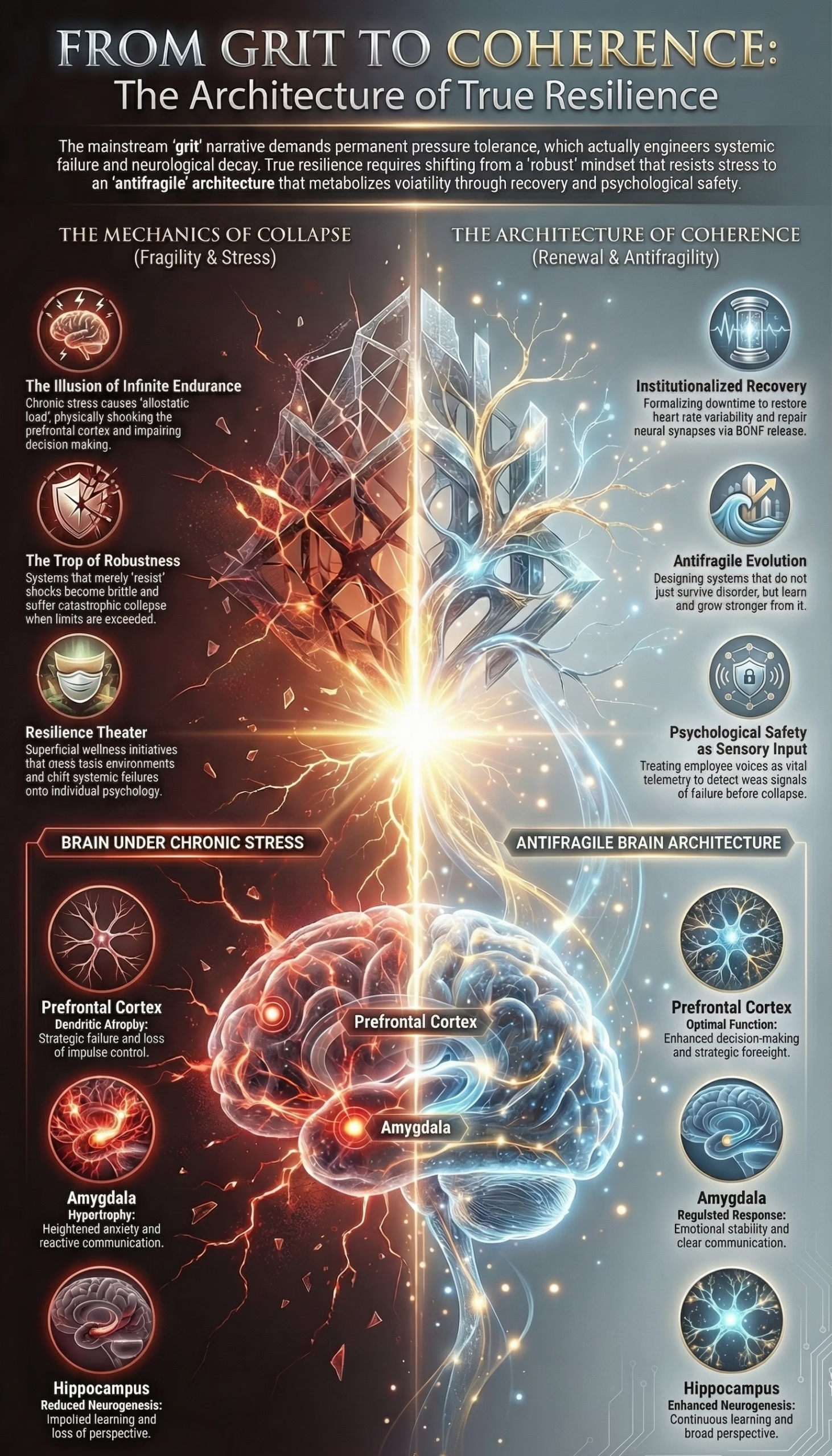
Under chronic stress, the prefrontal cortex undergoes rapid morphological changes. Excessive catecholamine release suppresses delay-related neuronal activity, leading to the debranching of pyramidal neurons and significant dendritic spine loss within the medial prefrontal cortex.13 Simultaneously, the amygdala—the brain’s primitive threat-detection center—experiences hypertrophy, growing denser and becoming hyper-reactive to external stimuli.18 Furthermore, chronic stress induces structural changes in the hippocampus, impairing memory consolidation and contextual understanding.19
The brain physically rewires itself to prioritize rapid, primitive survival responses over nuanced, complex problem-solving. This creates a dangerous paradox in modern organizational environments: the very situations that demand the highest levels of executive function and strategic clarity instead trigger a biological state that actively dismantles those precise cognitive abilities.17
Brain Region | Function in Homeostasis | Structural Change Under Chronic Stress | Impact on Professional Performance |
Prefrontal Cortex (PFC) | Executive function, working memory, cognitive flexibility, impulse control. | Dendritic atrophy, spine loss, decreased gray matter volume.4 | Inability to plan strategically, poor decision-making, loss of emotional regulation. |
Amygdala | Threat detection, fear conditioning, emotional processing. | Hypertrophy, increased synaptic connectivity, hyper-reactivity.18 | Heightened anxiety, hypervigilance, reactive and defensive communication. |
Hippocampus | Memory consolidation, spatial navigation, contextualizing experiences. | Reduced neurogenesis, structural shrinkage, impaired plasticity.19 | Memory deficits, inability to learn from new data, loss of perspective. |
The stressed brain does not merely react; it adapts by entering a “survival allocation mode,” systematically dialing down metabolically costly cognitive functions to preserve energy for perceived physical threats.22 Consequently, what management structures often diagnose as a lack of effort, a failure of willpower, or a sudden drop in dedication is, in reality, the biological manifestation of neural degradation. Expecting an individual to utilize “grit” to overcome a chemically and structurally induced deficit in their prefrontal cortex is a fundamental misunderstanding of human neurobiology.23
The Necessity of the Recovery Cycle
In the framework of neurobiology, recovery is not a luxury afforded to the weak; it is an absolute biological imperative for the strong. The cycles of the body are sacred and bound by absolute physiological limits.9 Recovery periods allow for the restoration of heart rate variability (HRV), which serves as a primary biomarker of autonomic nervous system flexibility and adaptive capacity.25 High HRV indicates a resilient system capable of toggling smoothly and efficiently between the sympathetic (activation) and parasympathetic (recovery) states.26
True cognitive resilience requires the integration of recovery protocols that actively promote neuroplastic healing. Practices that stimulate the parasympathetic nervous system—such as deep rest, low-intensity movement, mindfulness, and psychological detachment from work demands—facilitate the release of brain-derived neurotrophic factor (BDNF), a vital protein critical for repairing damaged synapses and growing new neurons in the hippocampus and prefrontal cortex.21 Without these intentional recovery cycles, the biological system becomes brittle, eventually leading to the catastrophic failure state clinically recognized as burnout.24
Systems Theory: From Brittleness to Antifragility
If the human brain is a microcosm of complex adaptation, the global organization is its macrocosm. To fully understand how systems fail under pressure, one must move beyond the psychological definitions of human endurance and examine the mathematical and structural realities of complex adaptive systems (CAS).
The mainstream corporate and societal paradigm frequently conflates resilience with robustness, assuming that a system capable of resisting change is inherently superior. However, systems theory dictates that resistance to change is a fatal vulnerability in a volatile environment.29
The Spectrum of Systemic Response
The behavior of systems under stress can be categorized into four distinct archetypes along a continuum of adaptation 31:
System Archetype | Response to Volatility & Stress | Structural Characteristic | Long-Term Outcome in Complex Environments |
Fragile | Damaged, degraded, or destroyed by disorder and volatility. | Highly optimized, lacking redundancy, rigid, highly coupled. | Rapid and complete failure when confronted by unexpected shocks. |
Robust | Resists shocks; remains unchanged in function despite structural perturbation.33 | Hardened boundaries, heavy defenses, inflexible, over-engineered. | Survives known threats but suffers brittle collapse when limits are exceeded. |
Resilient | Deforms under stress but rebounds to its original baseline state.34 | Elastic, capable of recovery, incorporates reactive adaptive capacity. | Survives and recovers, but expends significant energy merely to return to the status quo. |
Antifragile | Benefits, learns, and grows directly from disorder and randomness.5 | Decentralized, learning-oriented, incorporates stressors as vital information. | Evolves and increases in capability directly due to volatility and systemic shocks. |
The Danger of Robustness and the Risk of Brittleness
Robustness refers to a system’s ability to withstand perturbations in its structure without a change in its function.33 A robust system is designed to absorb a specific, predicted range of shocks. It relies on fortified barriers and a resistance to deformation. However, complex environments are defined by unpredictability, non-linear dynamics, and “black swan” events—high-impact, low-probability disruptions that fall completely outside the parameters of historical models and predictions.35
When a robust system encounters a stressor that exceeds its strictly designed capacity, it does not degrade gracefully; it shatters. This phenomenon is known in systems engineering as brittleness.31 Brittleness is characterized by a rapid, catastrophic fall-off or collapse of performance that occurs when events push a system beyond its boundaries for handling changing disturbances and variations.
Highly optimized, hyper-efficient systems—those that operate with no spare capacity, rely on just-in-time delivery, and utilize highly specialized agents—are inherently brittle.37 They lack the “graceful extensibility” required to stretch and adapt when the environment behaves in unpredicted ways.38 The pursuit of maximum efficiency often strips a system of the redundant pathways necessary to route around failure, ensuring that a localized disruption quickly cascades into a global collapse.39
The Antifragile Paradigm
Antifragility, a concept formalized by risk analyst Nassim Nicholas Taleb, describes systems that do not merely survive stress but actually require it to thrive.5 While a resilient system bounces back to its original state after a shock, an antifragile system bounces forward, utilizing the stressor as crucial information to restructure itself into a more capable and sophisticated form.6
Biological systems are inherently antifragile. Muscle tissue tears under the stress of physical exertion, only to rebuild denser and stronger through an overcompensation mechanism. The immune system requires exposure to pathogens to develop antibodies and map future threats. However, engineered and organizational systems must be intentionally and carefully designed for antifragility.32
This requires the intentional introduction of manageable, continuous stressors to expose hidden vulnerabilities and force the system to learn.5 An antifragile organization decentralizes its decision-making, distributes its infrastructure across multiple nodes, and treats failure not as an anomaly to be punished, but as a normal, necessary mechanism for evolutionary feedback.34 The system does not seek to eliminate volatility; it metabolizes it.
Organizational Psychology: The Trap of Resilience Theater
In the context of the modern workplace, the scientific principles of allostatic load and systemic brittleness are routinely ignored in favor of an ideology that blames the individual for structural failures. This dynamic manifests as “resilience theater”—the implementation of superficial wellness initiatives designed to give the appearance of care while ignoring the toxic, rigid architecture of the work environment itself.7
The Weaponization of Grit
When an organization demands that its people exhibit “grit” in the face of continuous, unsustainable workloads, it is shifting the burden of systemic failure onto the psychology of the worker.42 Telling an employee to be more resilient, to practice mindfulness, or to attend a yoga class while simultaneously doubling their workload, removing their autonomy, and maintaining a culture of fear is an exercise in profound futility.8
The grit narrative often serves to obfuscate social and structural inequities, implying that if an individual fails to thrive in a hostile environment, they simply lack the requisite character or perseverance.42 Interventions that focus solely on “toughening up” the individual—while leaving the structural stressors and broken processes intact—demonstrate a fundamental misunderstanding of human capacity.46 The individual cannot out-meditate a broken system. When the environment is fundamentally hostile to the biological requirement for recovery, “grit” becomes a mechanism for self-destruction, accelerating the path to burnout rather than preventing it.48
The Toxicity of Hero Culture
Resilience theater is frequently sustained and validated by a pervasive “hero culture.” In these environments, individuals who sacrifice their physical health, ignore personal boundaries, and endure immense stress to deliver results against all odds are celebrated and promoted.41 This culture rewards chronic sympathetic nervous system activation and normalizes allostatic overload as a baseline expectation.
Hero culture creates a dangerous organizational illusion of robustness. Because a few individuals are willing to absorb the friction of broken processes and systemic inefficiencies, the system appears to function smoothly from the outside.50 However, this creates a highly brittle architecture. The organization becomes entirely dependent on the unsustainable endurance of a few key actors. When those actors inevitably succumb to burnout, face a health crisis, or leave the organization, the hidden systemic vulnerabilities are instantly exposed, and the operational framework collapses.51 High-performing organizations recognize that hero culture is a severe systemic risk; true resilience relies on shared, sustainable processes rather than individual martyrdom.41
Psychological Safety as Systemic Sensory Input
The antidote to resilience theater is the intentional cultivation of psychological safety. Coined and extensively researched by Amy Edmondson, psychological safety is the shared belief that a team is safe for interpersonal risk-taking, meaning individuals can voice concerns, report mistakes, ask questions, and challenge the status quo without fear of embarrassment, marginalization, or retaliation.52
From a systems theory perspective, psychological safety is not merely a soft human resources initiative designed to make people feel comfortable; it is the sensory nervous system of the organization. A system cannot adapt to a threat it cannot perceive.54 If employees are terrified to report flaws or near-misses, the organization is essentially operating blind. It loses the vital feedback loops necessary for early error detection and graceful extensibility.55
During periods of constraint, economic pressure, and crisis, psychological safety is often the first asset sacrificed, as panicked leaders resort to command-and-control tactics.52 However, longitudinal research indicates that organizations with high psychological safety experience significantly lower rates of burnout and higher retention during crises.52 When employees know they can safely voice their exhaustion or point out operational flaws, the system can self-correct before the pressure results in brittle failure.28
Mirrors of Collapse: Real-World Case Studies
The fractal nature of reality dictates that the macrocosm reflects the microcosm; the principles of coherence, boundary management, and brittleness apply equally to a single human brain, a corporate network, and a global supply chain.9 Examining real-world case studies reveals the catastrophic consequences of relying on the grit narrative and the distinct power of antifragile design.
The Challenger Disaster: The Fatal Cost of Robustness and Grit
The 1986 Space Shuttle Challenger disaster serves as a definitive case study in the failure of the grit narrative and the danger of organizational brittleness. NASA’s operational culture at the time prioritized schedule adherence, economic impact, and an unyielding commitment to the mission over psychological safety and realistic risk assessment.56
The physical failure occurred in the O-rings of the solid rocket boosters, which lost their necessary elasticity in unseasonably freezing temperatures. However, the true systemic failure occurred in the communication and feedback loops.57 Engineers at Thiokol recognized the threat of the cold temperatures and attempted to halt the launch. Their concerns were overridden by management operating under the immense pressure of “amoral calculation” and an institutional demand for flawless performance.56
This was a profound failure of psychological safety. The system demanded “grit” to push through operational friction, treating a complex, unpredictable environment with a rigid, robust mindset.58 NASA assumed its systems were robust enough to absorb the anomaly. Instead, the system lacked graceful extensibility. The organization ignored the weak signals of failure generated by the engineers, resulting in a brittle collapse that cost seven lives and permanently altered the trajectory of the agency.31
The Healthcare System: The Collapse of the Medical Microsystem
The global healthcare system provides a tragic, real-time observation of allostatic overload at scale. Healthcare professionals, particularly physicians and nurses, are subjected to environments defined by immense, unending workloads, high-stakes decision-making, and profound moral injury.1 For decades, the medical field has relied heavily on the individual “grit” of its practitioners to bridge the widening gap between inadequate systemic resources and escalating patient needs.60
The result has been an epidemic of burnout, characterized clinically by deep emotional exhaustion, depersonalization, and a reduced sense of personal accomplishment.48 Rather than addressing the systemic drivers of this crisis, the healthcare system frequently engaged in systemic resilience theater, offering meditation modules and wellness seminars while simultaneously increasing administrative burdens and patient-to-provider ratios.46
The biological reality is that human clinicians cannot persevere infinitely through structural dysfunction. When the COVID-19 pandemic introduced an unprecedented shock to this already fragile system, the reliance on individual grit proved catastrophic.62 The system lacked antifragility; it did not have the decentralized resources, the spare capacity, or the systemic recovery protocols necessary to adapt dynamically.37 The ongoing healthcare retention crisis demonstrates that when an organization extracts survival from its individuals without replenishing their energy, the entire network eventually fractures.
Big Tech and Aviation: Antifragility in Practice
Conversely, certain sectors of the technology and aviation industries demonstrate the highly successful application of antifragile principles. In traditional software engineering, the standard approach to risk management was the “code freeze”—a period during high-traffic events (like major holidays) where no updates were allowed to the system. This is a classic “robust” strategy: hardening the boundaries to prevent failure from entering the system. However, this creates a brittle environment where, when inevitable failures do occur, teams are out of practice and the impact is devastating.40
Organizations like Meta and Google have shifted toward adaptive resilience and engineered antifragility.63 Instead of total code freezes, they utilize Dynamic Release Systems (DRS). These systems allow low-risk changes to proceed continuously while algorithmically blocking high-risk deployments.
Furthermore, practices like “Chaos Engineering”—where automated programs intentionally inject randomized failures into a live production system to test its response—force the system and the human operators to continuously learn, adapt, and improve their Mean Time To Recovery (MTTR).40 By treating failure as a normal, continuous scenario rather than an existential anomaly to be feared, these organizations metabolize volatility. The system becomes antifragile, growing more capable precisely because it is regularly exposed to manageable stress.64
Industry Sector | Systemic Approach | Management Strategy | Outcome Under Severe Volatility |
Traditional Healthcare | Fragile/Robust | Reliance on individual grit, resilience theater, hero culture. | High burnout, allostatic overload, mass attrition during crises.48 |
NASA (Challenger Era) | Robust/Brittle | Suppression of feedback, normalization of deviance, schedule pressure. | Catastrophic system failure when boundaries were challenged.56 |
Modern Software Engineering | Antifragile | Chaos engineering, dynamic release systems, blameless post-mortems. | Continuous learning, rapid adaptation, decreased recovery times.40 |
The Resilience Architecture Model
The transition from a fragile, grit-dependent organization to an antifragile, coherent system requires a fundamental redesign of operational philosophy. Resilience cannot be outsourced to the psychology of the individual; it must be structurally embedded into the environment.7 The Resilience Architecture Model provides a practical, systemic framework for organizations to maintain coherence and thrive under pressure.
1. Structural Boundaries and Spare Capacity
In a limitless environment, energy dissipates until exhaustion occurs. Boundaries are not restrictions; they are the sacred geometry that allows a system to contain and direct its energy.9 In organizational architecture, setting boundaries means establishing clear limits on workload, standardizing maximum operational capacities, and ruthlessly prioritizing clarity of direction over sheer volume of effort.28
Furthermore, systems must be designed with “spare capacity”—freely available agents, time, and resources that are not optimized to 100% utilization. If every asset is constantly engaged in primary tasks, the system becomes brittle. Spare capacity ensures that resources are available to pivot, innovate, and respond when unexpected disruptions occur.37
2. Intelligent Feedback Loops
A system is only as intelligent as its ability to perceive itself. Feedback loops must be continuous, multi-layered, and free of bureaucratic friction.66 This requires the dismantling of siloed data architectures and the integration of both qualitative human feedback and quantitative algorithmic data.51
When errors occur, the feedback loop must prioritize learning over punishment. By mapping relational dependencies and utilizing predictive models, the organization can recognize weak signals of distress before they cascade into systemic failure.68 The system must treat the voices of its frontline workers as vital telemetry data, adjusting operational tempo based on the realities reported from the edge of the network.
3. Institutionalized Recovery Protocols
Recovery can no longer be treated as a conditional reward for endurance; it must be integrated as a non-negotiable operational requirement.28 Just as the human nervous system requires parasympathetic activation to repair cellular damage and consolidate memory, the organizational system requires downtime to consolidate knowledge and repair processes.64
Recovery protocols must be formalized. This includes mandatory periods of low intensity following high-stakes projects, the enforcement of true psychological detachment during off-hours, and the normalization of rest as a productive state.69 The system must recognize that cycles of intense output followed by deep rest are sacred biological and operational laws, not signs of weakness.9
4. A Culture of Psychological Safety
The architecture of resilience requires a cultural foundation where truth can be spoken without consequence. Psychological safety must be actively modeled and fiercely protected by leadership.52 Leaders must demonstrate emotional regulation under pressure, acknowledge their own fallibility, and actively reward dissenting opinions and error reporting.28
When the culture removes the fear of retaliation, the organization transforms its workforce from passive executors into active, intelligent sensors capable of guiding the system through volatility. Truth replaces harmony as the ultimate cultural metric.
5. Ethical Intelligence
The final pillar of the Resilience Architecture is Ethical Intelligence. In highly complex, AI-integrated environments, it is easy for systems to optimize for pure efficiency at the expense of human dignity.70 Ethical intelligence ensures that the system’s goals remain firmly aligned with its humanistic values.71
This involves implementing “Human-in-the-Loop” (HITL) frameworks, where human oversight ensures that algorithmic decisions do not propagate bias, accelerate burnout, or cause secondary harm.72 Ethical intelligence demands that the system does not extract survival from its people, but rather creates an environment where both the individual and the organization can thrive in symbiosis. It is the recognition that the spirit of the tool is shaped entirely by the spirit of the user.9
Conclusion
The era of the endurance narrative has reached its terminal limit. The assumption that human beings and complex systems can infinitely absorb friction through sheer “grit” is a biological impossibility and a structural fallacy. When systems demand permanent pressure tolerance, they invite allostatic collapse. When organizations build rigid, highly optimized networks that resist change, they engineer their own sudden, catastrophic brittleness.
To survive the accelerating volatility of the modern world, it is necessary to move beyond the illusion of control and step into the reality of coherence. Reality is a fractal, and the systems built by humanity are direct reflections of the consciousness that designs them.9 It is time to stop building environments that demand martyrdom and start architecting systems that breathe, adapt, and learn.
True resilience is the graceful extensibility of a system that knows its boundaries, listens intimately to its environment, and respects the biological necessity of recovery. By embedding boundaries, feedback loops, psychological safety, and ethical intelligence into the very code of organizational structures, fragility is transformed into antifragility. Systems cease to be victims of disorder, and instead, allow the volatility of the world to teach them how to evolve. The bell of awakening has tolled; the shift from endurance to coherence is no longer optional—it is the fundamental requirement for the future of human and systemic flourishing.
Works cited
- The Power of Grit: How Healthcare Professionals Can Overcome Challenges and Thrive Under Pressure – Insights from Scott Burrows, accessed April 7, 2026, https://scottburrows.com/the-power-of-grit-how-healthcare-professionals-can-overcome-challenges-and-thrive-under-pressure-insights-from-scott-burrows/
- The Science Behind Grit And Resilience: What Research Actually Reveals – Dr. Eva Selhub, accessed April 7, 2026, https://www.drselhub.com/science-grit-resilience-research/
- Comparing Resilience and Grit: An Empirical Examination – Drexel Research Discovery, accessed April 7, 2026, https://researchdiscovery.drexel.edu/esploro/outputs/graduate/Comparing-Resilience-and-Grit-An-Empirical/991014632213304721
- Allostatic load, a measure of cumulative physiological stress, impairs brain structure but not β-accumulation in older adults: an exploratory study – Frontiers, accessed April 7, 2026, https://www.frontiersin.org/journals/aging-neuroscience/articles/10.3389/fnagi.2025.1508677/full
- On Antifragility in Systems and Organizational Architecture – Continuous Delivery, accessed April 7, 2026, https://continuousdelivery.com/2013/01/on-antifragility-in-systems-and-organizational-architecture/
- Anti-fragile VS Resilient explained in a picture | by Eric Saylors | Medium, accessed April 7, 2026, https://medium.com/@esaylors/anti-fragile-vs-resilient-explained-in-a-picture-b38d7a288464
- Contributor, Author at BusinessWest, accessed April 7, 2026, https://businesswest.com/blog/author/contributor/
- Developing resilience and grit in the workplace – Laughology, accessed April 7, 2026, https://laughology.co.uk/developing-resilience-and-grit-in-the-workplace/
- FRACTAL – THE AWAKENING Low.pdf
- Burnout From an Organizational Perspective – Stanford Social Innovation Review, accessed April 7, 2026, https://ssir.org/articles/entry/burnout_from_an_organizational_perspective
- Allostatic load biomarkers of chronic stress and impact on health and cognition – Emotional Brain Training, accessed April 7, 2026, https://www.ebtconnect.net/science/biomarkers_juster.pdf
- A Comprehensive Overview on Stress Neurobiology: Basic Concepts and Clinical Implications – Frontiers, accessed April 7, 2026, https://www.frontiersin.org/journals/behavioral-neuroscience/articles/10.3389/fnbeh.2018.00127/full
- Prefrontal cortex executive processes affected by stress in health and disease – PMC – NIH, accessed April 7, 2026, https://pmc.ncbi.nlm.nih.gov/articles/PMC5756532/
- Allostatic Load – a review of the literature – DVA, accessed April 7, 2026, https://www.dva.gov.au/sites/default/files/allostatic.pdf
- Neurobiological and Systemic Effects of Chronic Stress – PMC, accessed April 7, 2026, https://pmc.ncbi.nlm.nih.gov/articles/PMC5573220/
- The effects of allostatic load on neural systems subserving motivation, mood regulation, and social affiliation | Development and Psychopathology – Cambridge University Press, accessed April 7, 2026, https://www.cambridge.org/core/journals/development-and-psychopathology/article/effects-of-allostatic-load-on-neural-systems-subserving-motivation-mood-regulation-and-social-affiliation/CAFE8A2AB6C5B30363D4D906F7041DAD
- Stress-induced cognitive dysfunction: hormone-neurotransmitter interactions in the prefrontal cortex – Frontiers, accessed April 7, 2026, https://www.frontiersin.org/journals/human-neuroscience/articles/10.3389/fnhum.2013.00123/full
- Stress- and Allostasis-Induced Brain Plasticity – PMC – NIH, accessed April 7, 2026, https://pmc.ncbi.nlm.nih.gov/articles/PMC4251716/
- Stress and Executive Function Summary | Christopher S. Penn, accessed April 7, 2026, https://www.christopherspenn.com/wp-content/uploads/2025/02/stress_and_executive_function_summary.pdf
- Burnout Recovery for High Achievers with Neuromodulation – Neurotherapeutix NYC, accessed April 7, 2026, https://neurotherapeutixnyc.com/high-achiever-burnout-why-even-top-performers-are-turning-to-neuromodulation/
- The Stressed Brain Doesn’t Just React — It Adapts: What Neuroscience Reveals About Chronic Stress, accessed April 7, 2026, https://www.stressinsight.com/the-stressed-brain-doesnt-just-react-it-adapts-what-neuroscience-reveals-about-chronic-stress/
- The Hidden Logic of Stress…How Your Body Allocates Energy to Survive. With Dr D. Parker Kelley – YouTube, accessed April 7, 2026, https://www.youtube.com/watch?v=KjoCMJJjO38
- Burnout and the Brain – Association for Psychological Science, accessed April 7, 2026, https://www.psychologicalscience.org/observer/burnout-and-the-brain
- Burnout Exhausts Brain Function and Physiology – BrainFacts, accessed April 7, 2026, https://www.brainfacts.org/thinking-sensing-and-behaving/emotions-stress-and-anxiety/2024/burnout-exhausts-brain-function-and-physiology-031424
- The ART of resilience: a theoretical bridge across resilience perspectives – PMC, accessed April 7, 2026, https://pmc.ncbi.nlm.nih.gov/articles/PMC11995016/
- Beyond Grit: Building Resilience and Antifragility in the Age of AI | by Ed Madison – Medium, accessed April 7, 2026, https://medium.com/journalistic-learning/beyond-grit-building-resilience-and-antifragility-in-the-age-of-ai-950a10abb990
- The Neuroscience of Burnout: How to Rewire Your Brain for Recovery – Emma Jones, MD, accessed April 7, 2026, https://www.emmajonesmd.com/blog/neuroscience-of-burnout-brain-plasticity-recovery
- What Does Organizational Resilience Look Like? – Greater Good Science Center, accessed April 7, 2026, https://greatergood.berkeley.edu/article/item/what_does_organizational_resilience_look_like
- Four concepts for resilience and the implications for the future of resilience engineering, accessed April 7, 2026, https://maritimesafetyinnovationlab.org/wp-content/uploads/2021/06/4sensesofresiliencepublic.pdf
- Beyond Resilience: A Nuanced Framework for Conceptualizing Resistance Networks, accessed April 7, 2026, https://smallwarsjournal.com/2025/09/19/resilience-robustness-antifragility-resistance-planning/
- Resilience as Graceful Extensibility to Overcome Brittlenessi – IRGC, accessed April 7, 2026, https://irgc.org/wp-content/uploads/2018/09/Woods-Resilience-as-Graceful-Extensibility-to-Overcome-Brittleness-1.pdf
- Antifragility as a complex system’s response to perturbations, volatility, and time – PMC, accessed April 7, 2026, https://pmc.ncbi.nlm.nih.gov/articles/PMC10775345/
- Resilience and robustness in policy design: a critical appraisal, accessed April 7, 2026, https://ash.harvard.edu/wp-content/uploads/2024/02/resilience_and_robustness.pdf
- Fragility, Resilience & Antifragility – Sustainable Table, accessed April 7, 2026, https://www.sustainabletable.org.au/journal/fragility-resilience-and-antifragility
- Resilient DC White Paper – Huawei, accessed April 7, 2026, https://www-file.huawei.com/admin/asset/v1/pro/view/b90bfb4b398b43d18aa48afff05c1c56.pdf
- Antifragility and robustness – Blue Sky Junkie, accessed April 7, 2026, https://blueskyjunkie.ca/articles/2020-10/antifragility-robustness
- The need for general adaptive capacity—Discussing resilience with complex adaptive systems theory – PMC, accessed April 7, 2026, https://pmc.ncbi.nlm.nih.gov/articles/PMC12369295/
- The theory of graceful extensibility: basic rules that govern adaptive systems – Surfing Complexity, accessed April 7, 2026, https://surfingcomplexity.blog/wp-content/uploads/2025/10/3c732-woods2018-thetheoryofgracefulextensibility.pdf
- System Resilience – SEBoK, accessed April 7, 2026, https://sebokwiki.org/wiki/System_Resilience
- Safe Schema Updates – Resilient Vs Robust IT Systems | Octopus blog, accessed April 7, 2026, https://octopus.com/blog/safe-schema-updates-2-resilience-vs-robustness
- Young Worker Despair and Mental Health Crisis in Tech: Data, Root Causes, and Evidence-Based Career Solutions – Sundeep Teki, accessed April 7, 2026, https://www.sundeepteki.org/advice/young-worker-despair-and-mental-health-crisis-in-tech-data-root-causes-and-evidence-based-career-solutions
- The Problem With Grit | Harvard Graduate School of Education, accessed April 7, 2026, https://www.gse.harvard.edu/ideas/news/15/04/problem-grit
- (PDF) (Book Review) Debunking the Grit Narrative in Higher Education: Drawing on the Strengths of African American, Asian American, Pacific Islander, Latinx, and Native American Students edited by Angela M. Locks, Rocío Mendoza, and Deborah Faye Carter – ResearchGate, accessed April 7, 2026, https://www.researchgate.net/publication/378148627_Book_Review_Debunking_the_Grit_Narrative_in_Higher_Education_Drawing_on_the_Strengths_of_African_American_Asian_American_Pacific_Islander_Latinx_and_Native_American_Students_edited_by_Angela_M_Locks_R
- The Problem With Grit (Opinion) – Education Week, accessed April 7, 2026, https://www.edweek.org/leadership/opinion-the-problem-with-grit/2015/04
- “There’s Still That Window That’s Open”: The Problem With “Grit”, accessed April 7, 2026, https://digitalcommons.chapman.edu/cgi/viewcontent.cgi?article=1066&context=education_articles
- Breaking the Burnout Cycle: Building Organizational Strategies to Address Burnout Sources and Symptoms – NCBI, accessed April 7, 2026, https://www.ncbi.nlm.nih.gov/books/NBK614517/
- A pandemic of burnout: 4 questions for Dan Pelton – American Psychological Association, accessed April 7, 2026, https://www.apa.org/monitor/2023/01/addressing-employee-burnout
- A Narrative Review of Burnout Syndrome in Medical Personnel – PMC – NIH, accessed April 7, 2026, https://pmc.ncbi.nlm.nih.gov/articles/PMC11393962/
- Nurturing Organizational Culture → Area → Resource 3 – Lifestyle → Sustainability Directory, accessed April 7, 2026, https://lifestyle.sustainability-directory.com/area/nurturing-organizational-culture/resource/3/
- Deal & Kennedy Corporate Culture Types – Umbrex, accessed April 7, 2026, https://umbrex.com/resources/frameworks/organization-frameworks/deal-kennedy-corporate-culture-types/
- More Rave Than Waltz—Why the Complexity of Public Service Means the End for Hero Leadership | Request PDF – ResearchGate, accessed April 7, 2026, https://www.researchgate.net/publication/327425408_More_Rave_Than_Waltz-Why_the_Complexity_of_Public_Service_Means_the_End_for_Hero_Leadership
- Psychological safety at work is essential—especially amid crisis, accessed April 7, 2026, https://hsph.harvard.edu/news/psychological-safety-at-work-is-essential-especially-amid-crisis/
- In Tough Times, Psychological Safety Is an Asset, Not a Luxury | Working Knowledge, accessed April 7, 2026, https://www.library.hbs.edu/working-knowledge/psychological-safety-is-an-asset-not-a-luxury
- Emerging Risks In Digital Transformation: From Shadow IT To Algorithmic Bias – CIO Index, accessed April 7, 2026, https://cioindex.com/magazine/emerging-risks-in-digital-transformation-from-shadow-it-to-algorithmic-bias/
- Resilient | Adaptable | Well-Architected | Salesforce Developers, accessed April 7, 2026, https://architect.salesforce.com/docs/architect/well-architected/guide/resilient.html
- fighting the fire in our own house: how poor decisions are smoldering within the us – DTIC, accessed April 7, 2026, https://apps.dtic.mil/sti/tr/pdf/AD1052528.pdf
- The Challenger disaster: A tragic lesson in data analysis … – The Homa Files, accessed April 7, 2026, https://homafiles.info/2016/06/06/the-challenger-disaster-a-tragic-lesson-in-data-analysis/
- PCAST Meeting – Biden White House, accessed April 7, 2026, https://bidenwhitehouse.archives.gov/wp-content/uploads/2022/11/Meeting-Minutes_PCAST-Public-Meeting_9-21-2022_Final.pdf
- How Do Systems Manage Their Adaptive Capacity to Successfully Handle Disruptions? A Resilience Engineering Perspective, accessed April 7, 2026, https://cdn.aaai.org/ocs/2238/2238-9512-1-PB.pdf
- Prioritizing the Mental Health and Well-Being of Healthcare Workers: An Urgent Global Public Health Priority – PMC, accessed April 7, 2026, https://pmc.ncbi.nlm.nih.gov/articles/PMC8137852/
- Making Healthcare Safer IV Rapid Response: Acute Care Nursing Staff Shortages That Compromise Patient-to-Nurse Ratios, accessed April 7, 2026, https://effectivehealthcare.ahrq.gov/sites/default/files/related_files/nursing-staff-shortages-rapid-research.pdf
- A narrative review of research on healthcare staff’s burnout during the COVID-19 pandemic, accessed April 7, 2026, https://pmc.ncbi.nlm.nih.gov/articles/PMC9198672/
- The AI Automation Engineer in 2026: A Comprehensive Technical and Career Guide – Sundeep Teki, accessed April 7, 2026, https://www.sundeepteki.org/advice
- Build Personal Resilience with AI: Intelligent Training for Professional Strength and Recovery – Hyperspace, accessed April 7, 2026, https://hyperspace.mv/ai-resilience-building-training/
- Thriving in a Fortune 500 Company: A Case Study of Grit, Resilience, and Employee Perceptions – Digital Commons@ETSU, accessed April 7, 2026, https://dc.etsu.edu/cgi/viewcontent.cgi?article=4824&context=etd
- Continuous Resilience in Cyber-Physical Systems of Systems: Extending Architectural Models through Adaptive Coordination and Learning – arXiv, accessed April 7, 2026, https://arxiv.org/pdf/2511.17017
- ENTREPRENEURSHIP AND SUSTAINABILITY ISSUES ISSN 2345-0282 (online) http://jssidoi.org/jesi/ 2025 Volume 13 Number 2 (December) h, accessed April 7, 2026, https://jssidoi.org/jesi/article/download/1382
- AI-Native Supply Chain Resilience: A Multimodal Architecture for Predictive Intelligence, Optimization, and Real-Time Decision-M, accessed April 7, 2026, https://gsconlinepress.com/journals/gscarr/sites/default/files/GSCARR-2025-0372.pdf
- Dr. Jennifer, Unfiltered – Reboot Center, accessed April 7, 2026, https://rebootcenter.com/dr-jennifer-unfiltered/
- Evidence-Based AI Architecture and Learning Logs (May – December 2025, Jan 2026), accessed April 7, 2026, https://secondchancetolive.org/2026/01/15/evidence-based-ai-architecture-learning-logs-nov-2025-jan-2026/
- GNOSIS© — Ethical Intelligence, accessed April 7, 2026, https://www.gnosisethical.com/
- Ethical theories, governance models, and strategic frameworks for responsible AI adoption and organizational success – Frontiers, accessed April 7, 2026, https://www.frontiersin.org/journals/artificial-intelligence/articles/10.3389/frai.2025.1619029/full
- Ethical theories, governance models, and strategic frameworks for responsible AI adoption and organizational success – PMC, accessed April 7, 2026, https://pmc.ncbi.nlm.nih.gov/articles/PMC12307427/
COHERENCE
The "Grit" narrative (blind perseverance) is an illusion. Permanent pressure causes a catastrophic biological failure.
HOLD the screen to activate the SHIELD and absorb stress. This increases your Allostatic Load.
RELEASE to deactivate the shield and recover. If the load reaches 100%, the system shatters.
Master the rhythm between exertion and recovery to become Antifragile.
SYSTEM COLLAPSE
You sustained permanent pressure for too long. The system became brittle and shattered.
Antifragility Level Reached: 0


